Duchesne County Dog Registration Information
Service Dogs and Emotional Support Animals in Duchesne, Utah
If you’re searching for where to register a dog in Duchesne County, Utah for a service dog or emotional support dog, the key point is this: dog licensing is typically handled by your local city or local animal control office, while service dog and emotional support animal (ESA) status are legal categories that do not come from a “registration” website.
In other words, you may need a dog license in Duchesne County, Utah (often issued by your city), and you may also need to follow state and local rabies vaccination rules. But having a dog license is different from having a dog that qualifies as a service animal under federal law, and it is also different from having an ESA accommodation for housing.
Where to Register or License Your Dog in Duchesne County, Utah
Because licensing is often handled at the city level, start with the office that serves the address where you live (for example, Duchesne City residents often license through Duchesne City; Roosevelt area residents may be directed to Roosevelt City Animal Shelter/Animal Control). If you live outside city limits, call the county dispatch or county offices to confirm which animal control program serves your area.
Duchesne City (Dog License)
Address: 500 E Main St
City/State/ZIP: Duchesne, UT 84021
Phone: (435) 738-2464
Email: office@duchesnecity.com
Office hours: Not listed in available official sources
Roosevelt City Animal Shelter / Animal Control
Address: 255 S State Street
City/State/ZIP: Roosevelt, UT 84066
Phone: (435) 725-3649
Email: Not listed in available official city directory
Office hours: City buildings regular business hours: Mon 8 a.m.–5 p.m.; Tue 8 a.m.–8 p.m.; Wed 8 a.m.–5 p.m.; Thu 8 a.m.–5 p.m.; Fri 8 a.m.–5 p.m.
Duchesne County Sheriff / Dispatch (For Animal Control Direction Outside City Limits)
Street address: Not listed in available official source on the sheriff page
City/State/ZIP: Not listed in available official source on the sheriff page
Phone: Dispatch (435) 738-2424
Email: Not listed in available official source
Office hours: Not listed (dispatch is typically 24/7, but hours not stated in the source)
Overview of Dog Licensing in Duchesne County, Utah
Dog licensing and “registration” are usually local
When people ask “where do I register my dog,” they often mean getting a local license tag or registering an animal with local animal control. In Duchesne County, that process commonly happens at the city level (for example, Duchesne City provides dog license paperwork and contact details for licensing). Your exact steps can depend on whether you live inside Duchesne City, Roosevelt City, or another incorporated area, versus living in an unincorporated part of the county.
That’s why the most accurate approach is to start with your city office or animal shelter/animal control, then confirm whether the county has additional requirements for enforcement, impound, or rabies compliance. This is especially important if you’re looking for an animal control dog license Duchesne County, Utah and you’re not sure which agency serves your neighborhood.
Rabies vaccination is a core compliance requirement
Duchesne County’s animal control code includes explicit rabies control rules requiring owners to obtain a rabies vaccination for dogs and cats within a short timeframe after reaching four months of age (or after acquiring an older animal). The ordinance also requires the rabies vaccination to be current and administered by a licensed veterinarian, and it requires the vaccination tag to be worn. These rabies rules support public health and are often checked as part of licensing or enforcement actions.
How Dog Licensing Works Locally in Duchesne County, Utah
Step 1: Identify the licensing authority for your address
In Duchesne County, the first step is identifying which local jurisdiction issues your license:
- Within a city: Many residents obtain a license directly through their city office or city-connected animal control program (for example, Duchesne City provides a dog license contact, and Roosevelt City has animal shelter/animal control services).
- Outside city limits (unincorporated areas): Licensing and enforcement may be coordinated through county-level animal control administration or via dispatch direction to the appropriate responding agency.
Step 2: Prepare documents commonly required for a license
While requirements can vary by city, local licensing commonly requires proof that your dog is currently vaccinated for rabies. Some jurisdictions may also ask for owner identification, residency verification, and a licensing fee. If your dog is a service dog or ESA, you may still be expected to follow routine public health requirements like rabies vaccination and any local dog licensing rules.
Step 3: Apply, pay, and keep tags/current info
After application and payment, many jurisdictions issue a license record and/or a tag. Keep your contact information current so animal control can reach you quickly if your dog is found. If your city uses renewal cycles (annual or fiscal-year based), set a reminder so your dog license in Duchesne County, Utah does not lapse.
Common question: “Do service dogs or ESAs need a dog license?”
Often, yes. A dog license is generally a local animal control/public health program requirement. A dog being a service animal or ESA is a separate issue related to disability law or housing accommodation. Unless your local jurisdiction has a specific exemption (which must be confirmed with your local office), it is safest to assume your dog still needs to meet local licensing and rabies rules.
Service Dog Laws in Duchesne County, Utah
Service dog definition (public access)
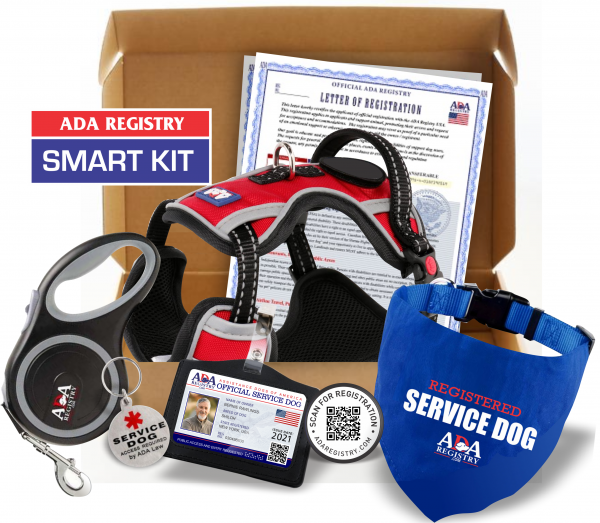
A service dog is generally a dog trained to do specific work or tasks for a person with a disability. This is what gives the dog public-access protections in many settings. A service dog’s legal status is not created by buying a certificate online or paying for a “registration.”
What businesses and staff may ask
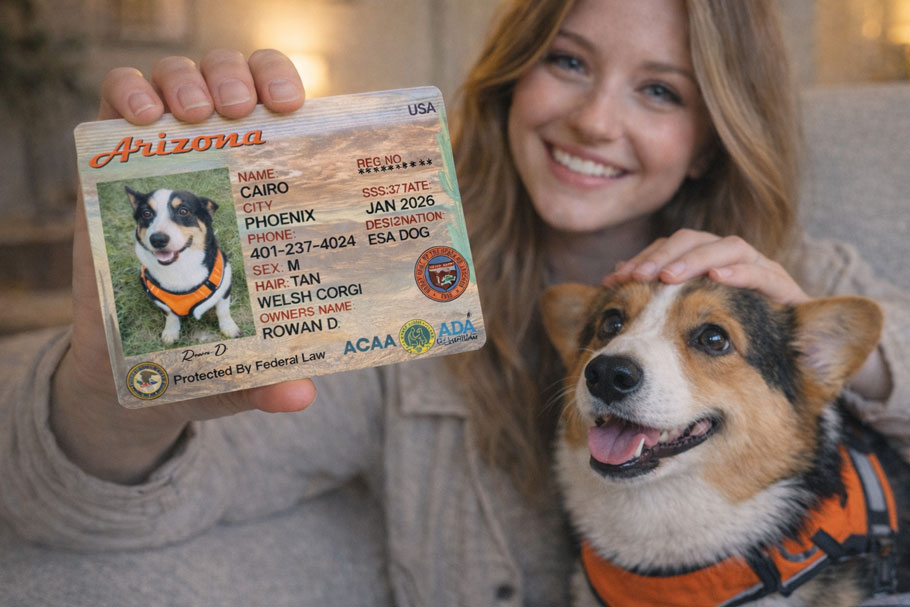
In many public places, staff are typically limited to asking questions that confirm the dog is a service animal and what tasks it is trained to perform. They generally cannot demand medical details or require a special ID card as proof. This is one reason third-party “registration cards” can be misleading: they are not the legal basis for access rights.
Licensing vs. service dog status
Key distinction: Dog license vs. service dog
- Dog license: A local requirement tied to animal control, identification, and public health (often connected to rabies compliance).
- Service dog: A legal status based on disability law and training to perform specific tasks.
- Practical takeaway: You may need both—keep your dog licensed locally and rely on the correct legal standards (not online “registrations”) for service dog rights.
Behavior and control still matter
Even for legitimate service dogs, owners must keep the dog under control and address health and safety requirements. Service animals can generally be excluded if they are out of control and the handler does not take effective action to control them, or if they are not housebroken. Local rules about rabies control and bite reporting can also apply.
Emotional Support Animal Rules in Duchesne County, Utah
ESAs are not the same as service dogs
An emotional support animal (ESA) is not the same as a service dog. ESAs typically do not have the same public-access rights as service animals. ESAs are most commonly relevant in housing contexts where a person may request a reasonable accommodation for an assistance animal.
Housing accommodations: what “documentation” usually means
For housing, a landlord or housing provider may be able to request reliable documentation supporting the disability-related need for an assistance animal, depending on the circumstances. This is not the same as a city dog license, and it is not satisfied simply by purchasing an online certificate. If you need an ESA accommodation, focus on the housing rules that apply to your situation, while separately keeping your dog compliant with local licensing and rabies requirements.
Licensing still applies
Having an ESA does not automatically exempt you from local animal control requirements. You should still plan to follow local rules for vaccination and licensing, and you should confirm requirements with the local office that handles licenses for your address.
Frequently Asked Questions
Licensing requirements and office locations may change. Residents should verify details with their local animal services office within Duchesne County, Utah.
Register A Dog In Other Utah Counties
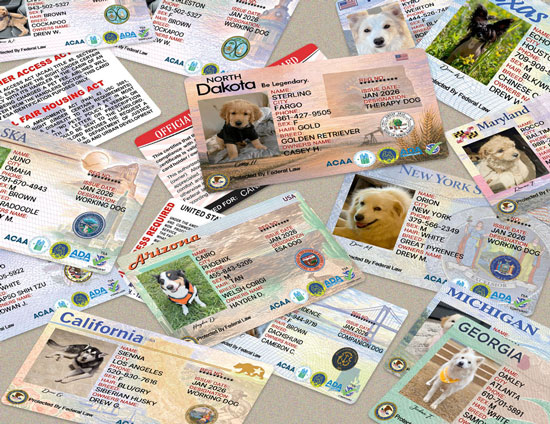
Select your county below to get started with your dog’s ID card. Requirements and license designs may vary by county, so choose your location to see the correct options and complete your pup’s registration.
- Beaver County Dog Registration
- Box Elder County Dog Registration
- Cache County Dog Registration
- Carbon County Dog Registration
- Daggett County Dog Registration
- Davis County Dog Registration
- Emery County Dog Registration
- Garfield County Dog Registration
- Grand County Dog Registration
- Iron County Dog Registration
- Juab County Dog Registration
- Kane County Dog Registration
- Millard County Dog Registration
- Morgan County Dog Registration
- Piute County Dog Registration
- Rich County Dog Registration
- Salt Lake County Dog Registration
- San Juan County Dog Registration
- Sanpete County Dog Registration
- Sevier County Dog Registration
- Summit County Dog Registration
- Tooele County Dog Registration
- Uintah County Dog Registration
- Utah County Dog Registration
- Wasatch County Dog Registration
- Washington County Dog Registration
- Wayne County Dog Registration
- Weber County Dog Registration